Torzon FAQ
The Torzon FAQ on TorzonWatchers gives short answers to common Tor Browser onion questions that Torzon visitors ask. This Torzon FAQ doubles as a Tor Browser FAQ for hidden-service readers and is published for educational and research purposes only — Torzon-specific endpoint questions point to the Torzon Market Links hub; broader Tor Browser FAQ topics point to official Tor Project docs where that helps. TorzonWatchers does not run any Torzon service; we only verify and list. If you arrived searching "tor browser faq" or "torzon questions," every answer below stays at the Torzon FAQ level of detail.
Do I need a VPN with Tor Browser? (torzon vpn)
Usually no. The "torzon vpn" question comes up because forum threads suggest stacking a VPN on top of Tor Browser. A VPN plus Tor changes your trust model: the VPN provider sees you enter Tor. For most readers loading an onion site, Tor Browser alone is the right tool. If your country blocks Tor, bridges inside Tor Browser are the first fix — see tor browser not connecting.
Can I open onion links in Chrome or Safari?
No. Standard browsers do not speak the Tor protocol. Extensions that claim otherwise are high-risk. Use Tor Browser from the Tor Project.
What is the difference between TorzonWatchers and the service we list?
TorzonWatchers is a clearnet directory and FAQ. We publish verified hostname records and Tor Browser help. We do not run the listed service's servers, wallets, or support desk. The verified hostname table on the TorzonWatchers home page is documentation of what we reviewed, not the remote service itself.
How do I tell a real Torzon address from a fake one?
Copy from the verified hub table and compare every character to what someone sent you. Reject addresses pasted from chat apps, "forward this" Telegram messages, and screenshots. If an operator publishes a signed notice, verify the PGP signature before trusting new hostnames inside it.
Why do hostnames change?
Operators add or retire mirrors for capacity and abuse handling. A dead bookmark is common — read the changelog instead of asking strangers for a "new link."
Is the service down, or is my Tor broken?
Check the status notes page for what we last saw during review, then run through tor browser not connecting. Status notes describe remote timeouts; troubleshooting covers local clock, bridges, and outdated clients.
Should I use the clearnet directory or the onion hostname?
They are different surfaces. Research and address lists can live on clearnet. The service itself, when offered as a hidden service, only answers on .onion. Never assume a .com clone is the same backend.
What is a mirror?
A mirror is an alternate hostname routed to the same resource. Mirrors are not "backups you download" — they are different onion names. Use the table on the hub, not a second-hand list.
What does .onion mean?
It marks a Tor hidden service name. v3 names are 56 characters before .onion. They are resolved inside Tor, not through normal DNS.
Why is the page so slow inside Tor Browser?
Hidden services hop through more relays than clearnet sites. Slow loads are common during DDoS periods. Wait two minutes once. If every onion site fails, fix Tor locally before you blame one vendor.
Captcha loops in Tor Browser — normal or hacked?
One captcha after connect is common. Endless captcha resets after you pass once can mean a bad mirror or an attack site. Stop and recheck the hostname against the verified table.
Can I use Tor on Android?
Yes, via Tor Browser for Android from the same Tor Project download hub. The paste-and-go steps match desktop; the screen is smaller, so typos happen more often — double-check the string.
Is it illegal to use Tor Browser?
Tor Browser is legal in many countries. What you do after connecting may fall under local law. This Torzon FAQ does not provide legal advice and the wider site exists for educational and research purposes only. Read the Tor Project overview for what Tor is designed to do.
Where does TorzonWatchers get its hostname list?
TorzonWatchers combines direct observation (loading hostnames in Tor Browser during review), operator-signed announcements when available, and corroboration from published reporting. Details are on About TorzonWatchers.
Why does Tor Browser say "Problem loading page"?
Tor Browser shows generic errors when circuits fail or hidden services time out. Open the circuit display (⌘/Ctrl+Shift+L on desktop) only if you already know how to read it — otherwise follow tor browser not connecting in order instead of guessing.
Can I save an onion site to the desktop?
You can bookmark inside Tor Browser. Do not export the bookmark to a non-Tor browser. The bookmark is only valid for Tor.
Someone sent a QR code — is it safe to scan?
QR codes hide typos. Scanning with a phone camera may open the wrong app. Type the hostname from the verified table manually on the device that will run Tor Browser.
Does TorzonWatchers track what I do after I leave?
No. TorzonWatchers publishes clearnet pages only. We do not sit in your Tor circuit and do not receive login events on the remote service.
Will a free VPN fix a timeout?
Unlikely. A VPN adds another party and often slows Tor further. Fix bridges and clocks first.
What does account registration look like inside a verified mirror?
This Torzon FAQ entry exists because first-time readers ask whether the prompts they see after pasting a verified hostname into Tor Browser are real or a phishing copy. The two screenshots below were captured during a TorzonWatchers reachability review and are reproduced as research evidence of the standard prompt flow — not as a setup tutorial. If a remote service form looks materially different (extra fields asking for email, payment data, or KYC documents), that is a strong signal you are on a fake mirror and should recheck the hostname character-by-character against the verified hub table.
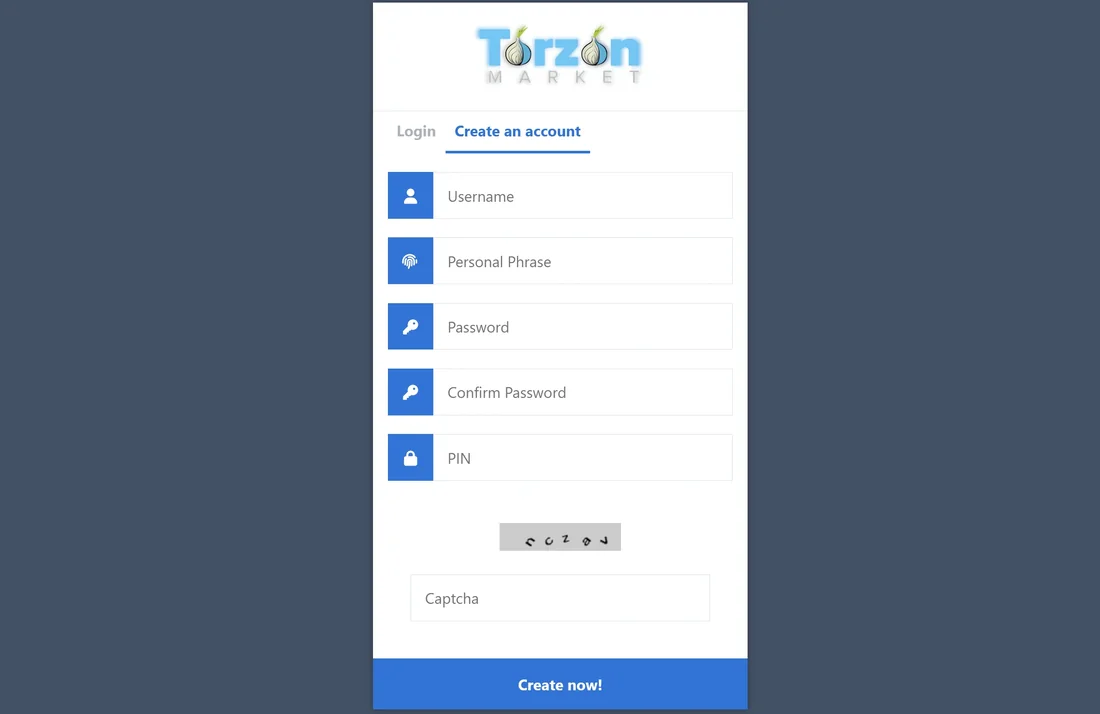
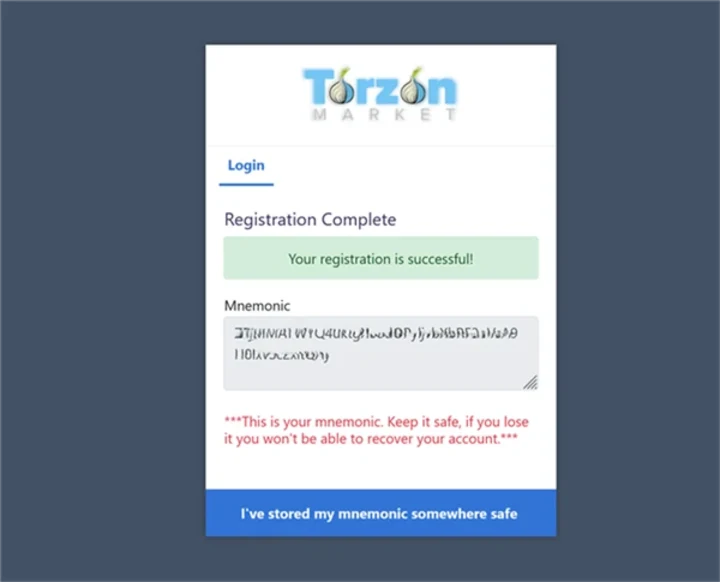
Both screenshots are dated research records. The fields shown are documented here strictly so readers can compare the prompts they see in Tor Browser against the verified-mirror reference state and stop trusting fake registration pages that ask for unrelated personal data.
Two-factor or PGP login on the remote service
Some hidden services ask for PGP or TOTP after the onion loads. That prompt is separate from reaching the hostname. Solve connectivity first via tor browser not connecting, then handle account tools on the remote site.
Can I use Orbot instead of Tor Browser on desktop?
Orbot targets mobile routing patterns. Desktop users should stay on Tor Browser for interactive sites. Mismatched clients produce "works on phone, fails on laptop" reports that are really client differences.
Why list three mirrors if only one works?
Operators split load across mirrors. A mirror can be slow but alive. The TorzonWatchers table documents what we saw on each row, not a popularity contest.
Are there fake "Torzon scam" sites?
Yes. Phishing copies of any popular hidden service appear constantly. The torzon scam pattern looks the same as other lookalike scams: characters changed in the middle of a hostname, a fake clearnet "official" page asking for credentials, or a Telegram channel posting unsigned hostnames. The TorzonWatchers Torzon FAQ recommends only the verified hub table and PGP-signed operator notices.
How is this Torzon FAQ kept current?
The Torzon FAQ is updated alongside the hub table. When a Tor Browser question turns into a repeated support pattern, we add it to the Torzon FAQ here. The Torzon FAQ does not replace the status notes — it answers conceptual Tor Browser questions rather than per-day uptime. Readers searching "tor browser faq" or "torzon questions" land on this single Torzon FAQ page rather than a separate help wiki.
Glossary
| Term | Meaning |
|---|---|
| Mirror | Second hostname for the same service |
| Onion / .onion | Tor hidden service address |
| v3 | Current 56-character onion format |
| Bridge | Unlisted Tor relay used when Tor is blocked |
| Circuit | The path your Tor traffic takes this session |
| DDoS | Traffic flood that makes sites time out |
| PGP signature | Cryptographic proof a message came from a key holder |
| Clearnet | Normal internet (non-Tor) |
| HSDir | Hidden service directory entry inside Tor |
| Pluggable transport | Obfuscation layer Tor Browser uses with bridges |